PAYE in Nigeria from 2026: what changed and how to work it out
The Nigeria Tax Act 2025 changed how employees are taxed from 1 January 2026. The new bands, rent relief, what comes off before tax, two worked examples and a monthly checklist for employers.

Edema Ukabi, ToolkitDeck Team
· 6 min read

Key points
- From 1 January 2026, PAYE is worked out under the Nigeria Tax Act 2025.
- The first ₦800,000 of taxable income a year is taxed at 0%. Rates then rise in bands from 15% to a top rate of 25%.
- The old consolidated relief allowance is gone. Employees who rent can claim rent relief of 20% of their annual rent, up to ₦500,000.
- The employee's 8% pension contribution still comes off before tax is worked out.
- Anyone earning the national minimum wage or less pays no PAYE.
- PAYE is usually due to the state revenue service by the 10th of the following month.
From 1 January 2026, PAYE in Nigeria is worked out under the Nigeria Tax Act 2025. If you pay staff, even two or three people, the way you calculate each person's tax has changed: the bands are new, a familiar allowance has gone and a new relief has arrived.
This guide explains the new rules in plain terms. It shows what comes off before tax, works through two examples line by line and ends with a monthly checklist, so you can check your own payroll against it.
What changed in PAYE in 2026?
Four changes matter most for a typical payroll:
New tax bands. The first ₦800,000 of taxable income a year is taxed at 0%. Rates then rise from 15% to a top rate of 25%.
No consolidated relief allowance (CRA). The allowance every employee used to get, ₦200,000 or 1% of gross pay plus 20% of gross pay, no longer exists.
Rent relief instead. Employees who rent their home can deduct 20% of the rent they pay, up to ₦500,000 a year.
A minimum wage exemption. Anyone earning the national minimum wage or less pays no PAYE.
Old bands and new bands side by side
Old rules (until 2025) | Rate | New rules (from 2026) | Rate |
|---|---|---|---|
First ₦300,000 | 7% | First ₦800,000 | 0% |
Next ₦300,000 | 11% | Next ₦2,200,000 | 15% |
Next ₦500,000 | 15% | Next ₦9,000,000 | 18% |
Next ₦500,000 | 19% | Next ₦13,000,000 | 21% |
Next ₦1,600,000 | 21% | Next ₦25,000,000 | 23% |
Above ₦3,200,000 | 24% | Above ₦50,000,000 | 25% |
Most lower and middle earners pay less tax under the new rules, mainly because of the larger tax-free band. Higher earners, and those who don't rent, may pay more, because the CRA has gone.
How do the new tax bands work?
Tax is charged on the year's taxable income, band by band. Each rate applies only to the part of income that falls inside its band:
Taxable income in the year | Rate | Most tax in this band |
|---|---|---|
First ₦800,000 | 0% | ₦0 |
Next ₦2,200,000 (up to ₦3m) | 15% | ₦330,000 |
Next ₦9,000,000 (up to ₦12m) | 18% | ₦1,620,000 |
Next ₦13,000,000 (up to ₦25m) | 21% | ₦2,730,000 |
Next ₦25,000,000 (up to ₦50m) | 23% | ₦5,750,000 |
Above ₦50,000,000 | 25% | 25% of the rest |
Because each rate only touches the naira inside its band, a pay rise never leaves someone worse off overall. Only the extra pay is taxed at the higher rate.
What comes off before tax is worked out?
Taxable income is gross pay less certain contributions and reliefs. The common ones are:
The employee's pension contribution: 8% of basic, housing and transport pay, under the Pension Reform Act.
National Housing Fund (NHF): 2.5% of basic pay, for employees who contribute.
National Health Insurance contributions, where they apply.
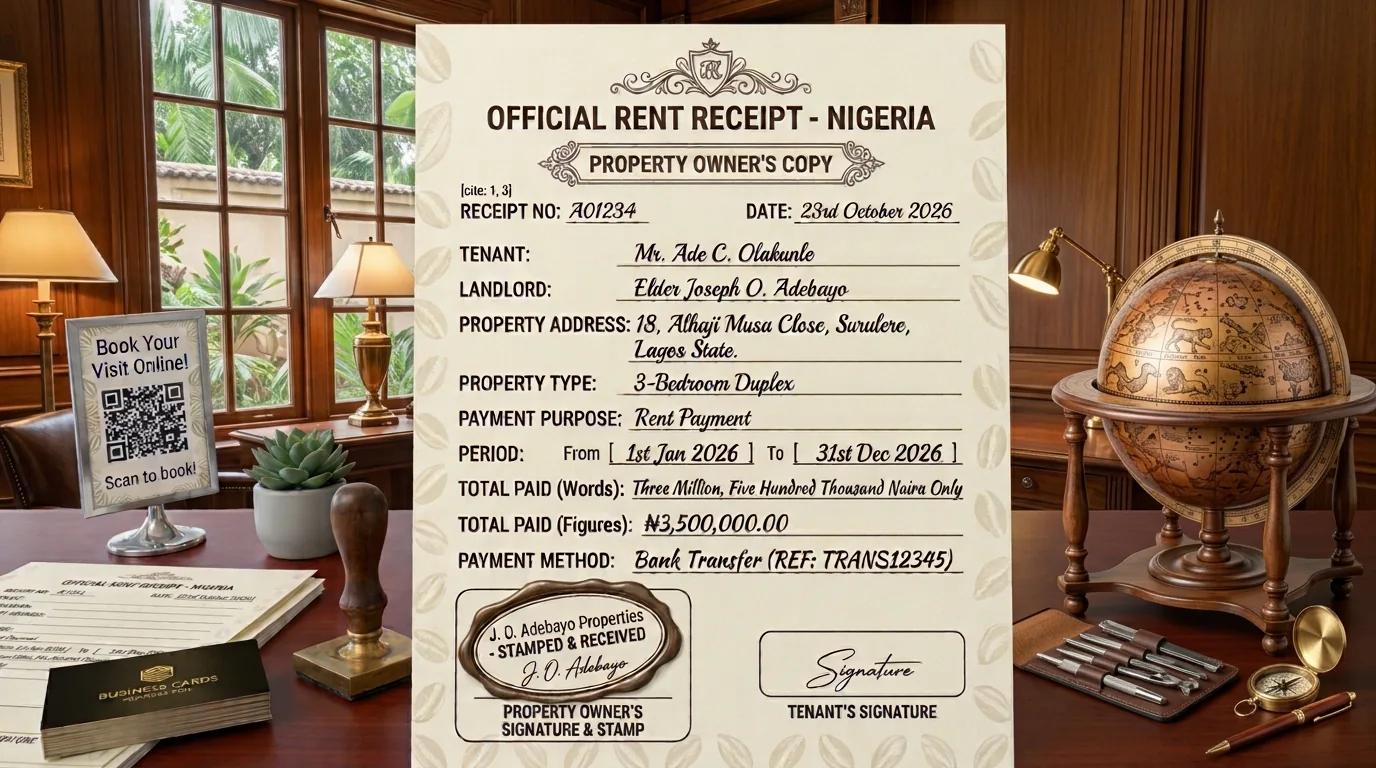
Rent relief: 20% of the annual rent the employee pays for their home, up to ₦500,000. The employee needs to declare their rent and keep proof, such as a tenancy agreement and rent receipts.
Life insurance premiums and interest on a loan for their own home, where they apply.
The employer's own 10% pension contribution is paid on top of salary. It doesn't reduce the employee's tax.
Worked example 1: ₦500,000 a month, renting
An employee is paid ₦500,000 a month, all of it basic, housing and transport pay. They pay ₦1,200,000 a year in rent and don't contribute to NHF.
Gross pay for the year: ₦500,000 × 12 = ₦6,000,000
Pension, 8%: ₦480,000
Rent relief: 20% of ₦1,200,000 = ₦240,000 (under the ₦500,000 cap)
Taxable income: ₦6,000,000 − ₦480,000 − ₦240,000 = ₦5,280,000
Now apply the bands:
Band | Amount in the band | Tax |
|---|---|---|
First ₦800,000 at 0% | ₦800,000 | ₦0 |
Next ₦2,200,000 at 15% | ₦2,200,000 | ₦330,000 |
Remaining at 18% | ₦2,280,000 | ₦410,400 |
Total | ₦5,280,000 | ₦740,400 |
That is ₦740,400 a year, or ₦61,700 a month deducted as PAYE.
Worked example 2: ₦150,000 a month, not renting
An employee is paid ₦150,000 a month and doesn't claim rent relief.
Gross pay for the year: ₦1,800,000
Pension, 8%: ₦144,000
Taxable income: ₦1,656,000
Tax: the first ₦800,000 is tax-free, and the remaining ₦856,000 is taxed at 15%, which comes to ₦128,400 a year, or ₦10,700 a month.
How are bonuses and one-off payments taxed?
A bonus, overtime or any other one-off payment is taxed at the employee's top rate. The simplest correct method is:
Work out the year's tax with the bonus.
Work out the year's tax without it.
The difference is the tax on the bonus.
This stops a December bonus being taxed as if it were paid every month.
When and where do you pay PAYE?
PAYE goes to the state internal revenue service for the state where the employee is treated as resident, which for most staff is where they live. It is usually due by the 10th of the following month, so January's PAYE is due by 10 February. Staff in the Federal Capital Territory pay through the FCT Internal Revenue Service.
Pension contributions go to each employee's pension fund administrator, usually within seven working days of pay day. An annual return of everyone's pay and tax, known as Form H1, is generally due by 31 January of the following year.
Because practice varies between states, confirm the deadline and the payment channel with your state revenue service when you register.
A monthly payroll checklist for employers
Update any pay changes, joiners and leavers.
Check each employee's rent relief details are current.
Work out gross pay, pension, NHF and other deductions.
Work out PAYE using the 2026 bands.
Pay salaries.
Pay pension to each fund administrator within seven working days.
Pay PAYE to the state revenue service by the 10th.
Give each employee a payslip showing gross pay, each deduction and net pay.
Keep a schedule of every payment for the year-end return.
Common questions
Is NHF compulsory?
The NHF has long applied to employees, but its application to private-sector staff is debated and handled differently by different employers. Decide your approach with your adviser, apply it consistently and show it on each payslip.
What if an employee doesn't rent?
They don't get rent relief. Their taxable income is gross pay less pension and any other deductions that apply. Employees who own their home may be able to deduct interest on a loan they took to buy it.
Are allowances such as housing and transport taxable?
Yes. They are part of gross pay and are taxed like the rest of salary. They also form part of the base for the 8% pension contribution.
Does the minimum wage exemption apply to part-time staff?
The exemption is about earnings at or below the national minimum wage. For part-time or casual staff, check how your state revenue service applies it.
Do I need to change payslips?
Payslips should show the new deductions, including rent relief where it applies. Staff will notice their tax changed, and a clear payslip saves a lot of questions.
Let payroll do the sums
ToolkitDeck's payroll works out PAYE under the 2026 rules, with rent relief, pension, NHF, NSITF and ITF. It handles bonuses, staff loans and people who join or leave mid-month, sends each person their payslip by a private link, and gives you a bank file and a schedule of what to pay and when. It's free for up to five people. You can also check a single salary with the free PAYE calculator.
Landlords and property managers may also find what a rent receipt in Nigeria should show useful: rent receipts are what employees need to claim rent relief.